
Bonita: “If the aunties are dancing, you’re doing a good job”
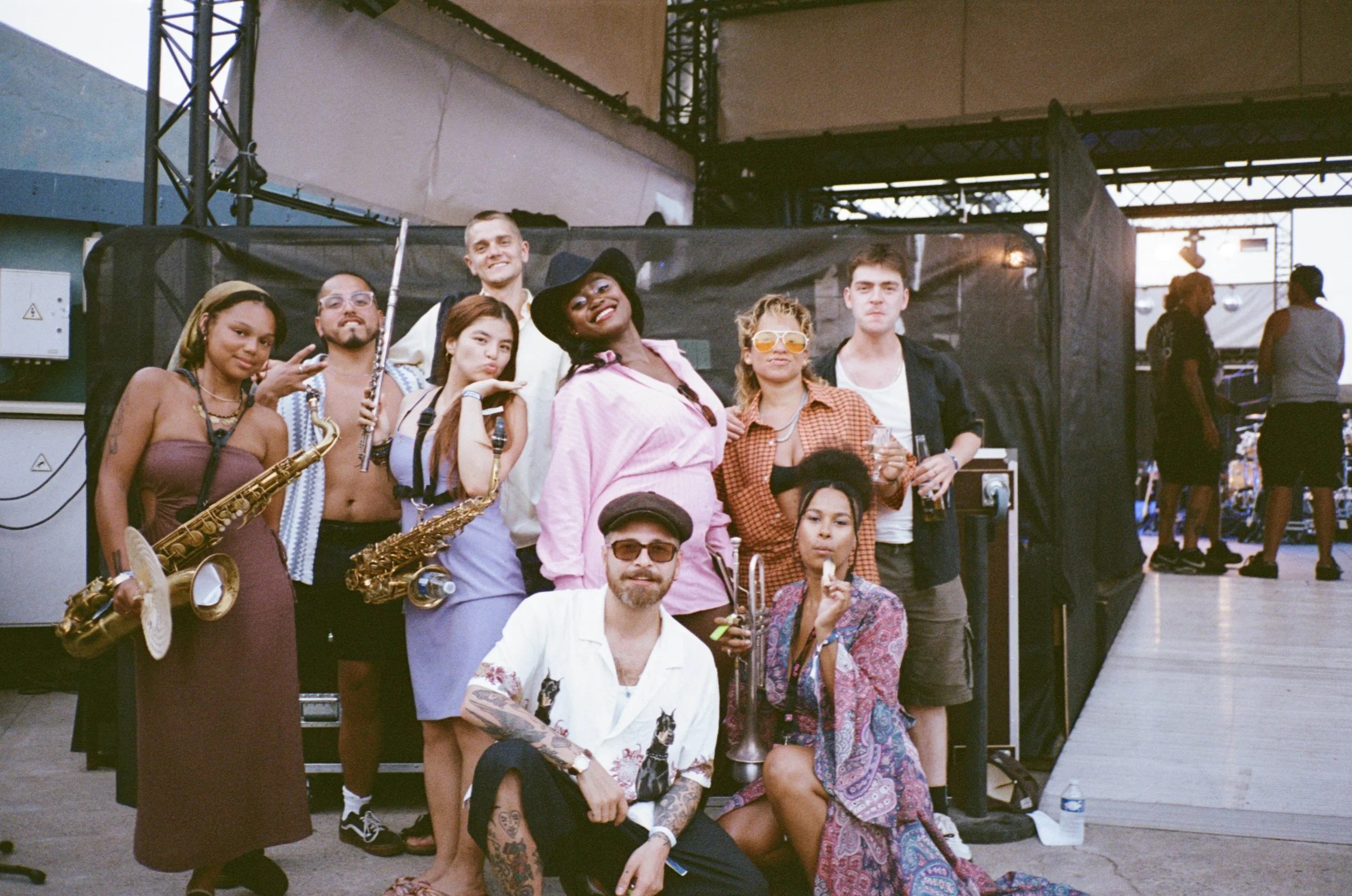
Bonita didn’t land in London fully formed. It grew gradually, shaped by Latin American musical lineage, late-night ideas, radio shows and the push to build something honest in a city that doesn’t always make space for it.
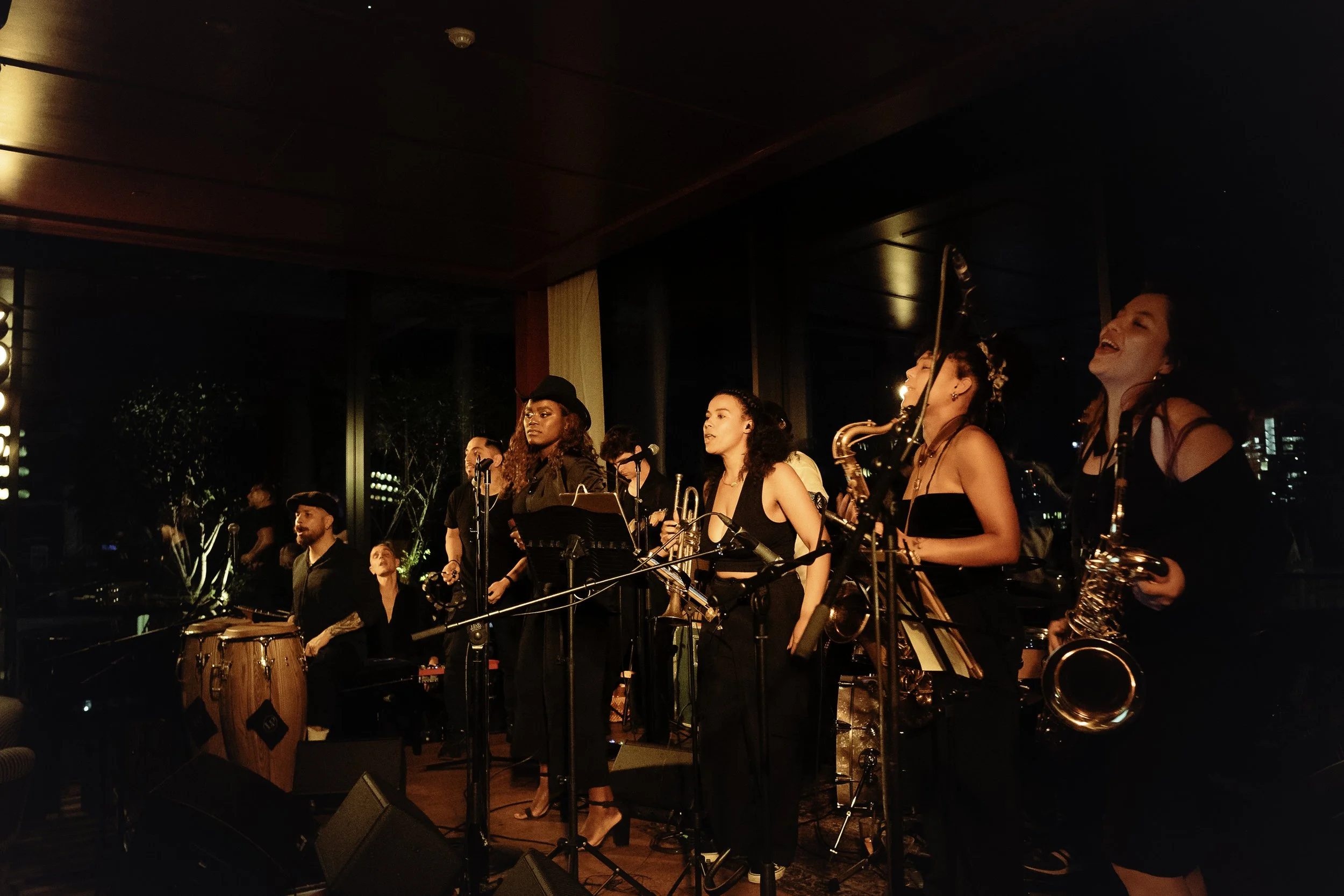
Speaking to Santiago Morales, he explained how he and Saga started Bonita during lockdown as a show on Soho Radio — long before it became the collective now packing out venues and touring worldwide. Bonita is a space where elders play alongside younger musicians, and where London’s Colombian, Ecuadorian and Cuban communities can show up fully without being squeezed into shorthand versions of themselves. They play in the moment, moving through salsa, Latin jazz, folklore, cumbia and improvisation in a way that feels instinctive.
When they perform, the room tells the story: aunties dancing, younger listeners seeing themselves reflected. Joy, memory and generational knowledge moving between people who might never normally share a space. Bonita isn’t about visibility for the sake of it, it’s about keeping Latin American music alive, honouring its roots and giving it the space to evolve.
And of course, it was Chris P Cuts who put us onto Bonita first. From there, FOUND follows the thread.
For anyone new here — how did Bonita actually begin?
I started it with my friend Saga, after working on a project in Colombia. I’m from Bogotá, so I’ve always stayed close to the music scene there, and a lot of that energy fed straight into Bonita. During the pandemic, Saga — he’s a graphic artist — made this design that ended up becoming the Bonita logo. He showed it to me randomly and I was like, man, this is exactly what I’ve been dreaming about.
So we started with a radio show on Soho Radio during the second lockdown. And for me, moving to London as a Latin American was the first time I really saw how we’re perceived here — and it felt narrow. A lot of people’s idea of Latin America comes through politics, economics, drugs… but we also carry some of the strongest heritage in the world: Indigenous cultures, deep musical roots, innovation.
I wanted to widen that window. It’s not about me — it’s about amplifying the voices that made me who I am.
So it started as education, but it quickly became community?
Exactly. Once clubs started opening again, we started doing nights. At the beginning it was hilarious because you couldn’t dance — imagine Latin music playing and everyone sitting down, looking at each other like, what is this? You just want to stand up. Then the mission grew. I’ve played jazz and hip hop in London for years, and I realised Latin musicians here get boxed in really fast. You’ve got some of the best musicians in the world in this city — Cubans, Colombians, people who’ve played with legends — and they’re getting hired to dress up and play the same five songs. So I wanted to create a space where they could play what they actually want to play.
That’s where the live nights come in?
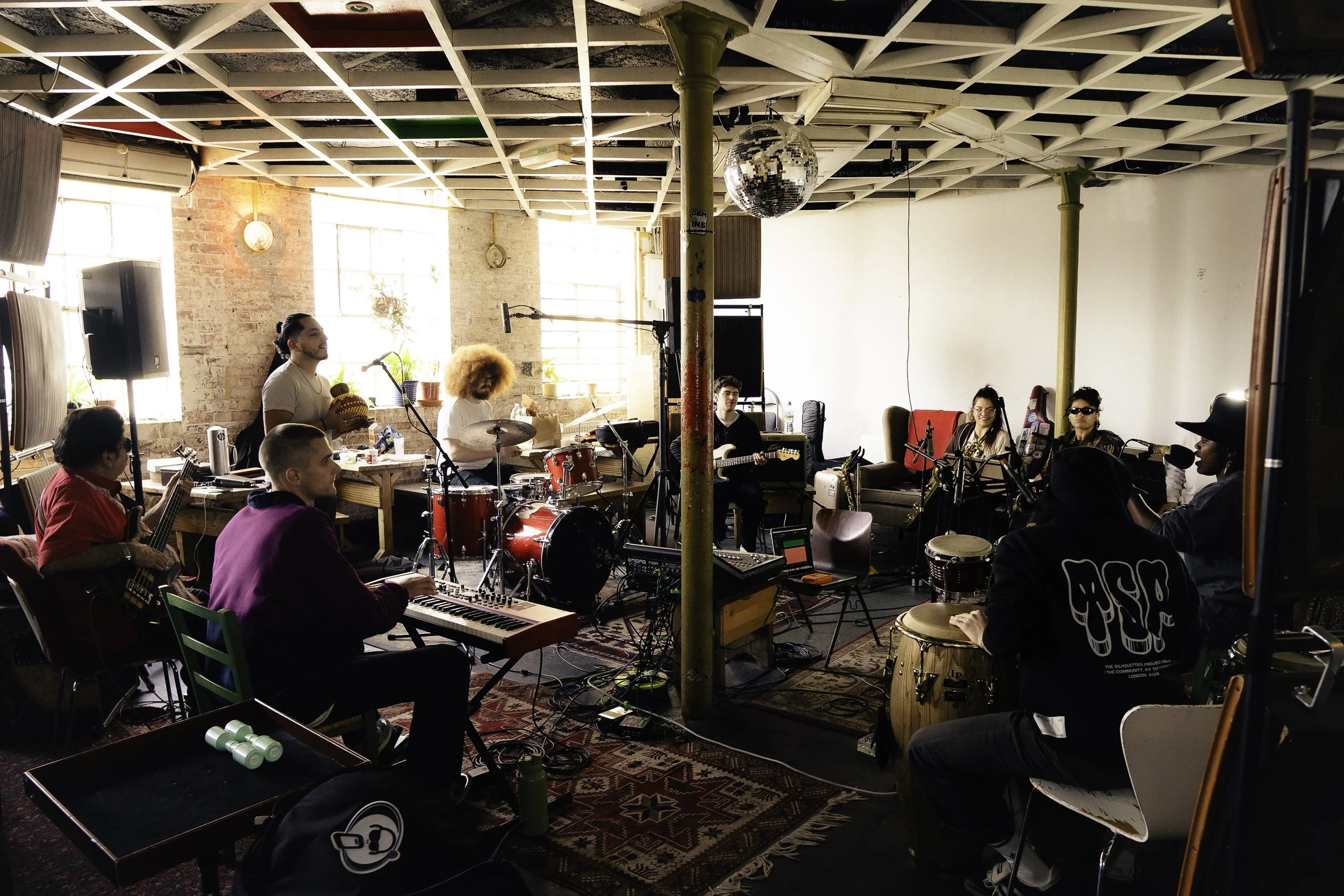
When we built the Bonita House Band, the idea was always to bring in different guests — especially elders. Our first guest was Dorance Lorza, a salsa legend from Colombia who lives here, a vibraphone player with a deep history. We told the story of the vibraphone in Latin music — from Tito Puente in New York to the sounds coming out of Venezuela — all through the music itself. That bridge between elders and younger players is the whole point. We work hard to keep that line strong.
Was there a moment where it clicked — like, this is happening?
The first nights were at this spot in Seven Sisters — very Latin American, especially Colombian. By the third night, people couldn’t get in. It was packed, people were outside. And the crowd was everything we hoped for — aunties, uncles, grandmas, super young Latinos seeing someone their age play salsa for the first time, plus the wider London crowd. A mix we didn’t even know could exist. And honestly? Having the elders there makes you feel secure. And if the aunties are dancing, you know you’re doing a good job.
You talk a lot about bridging generations. Who shaped that in you?
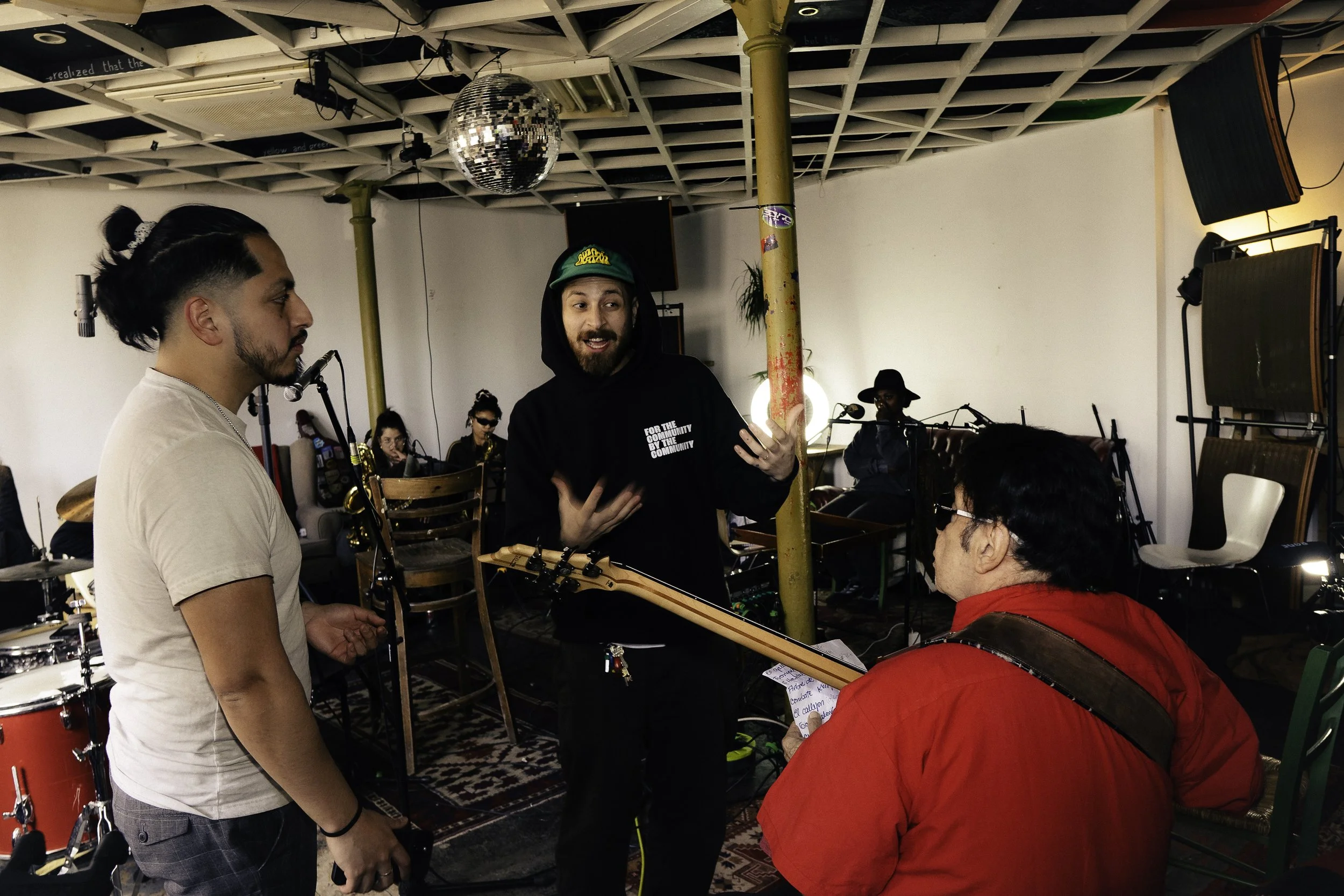
My friend Saga for sure— he’s older than me, a real cultural catalyst. He helped start graffiti and hip-hop movements there. He had this communal house — recording studio, workshop space, parties, galleries. Everyone came through there, he connected everyone. He taught me that cultural movements don’t happen in isolation. It’s never a one-person mission. Especially when conditions aren’t easy, you need each other. And here in the UK, Chris P Cuts was that person for me. One of the first people I met. He connected me with people, put me in rooms, helped me get my first job in a studio — he’s been that bridge on this side of the world.
Bonita has always brought different generations together — but was there a moment where you really felt that click in real time?
Yeah, definitely. In 2024 we ended up collaborating with Fruko — a Colombian maestro whose music has been in my life forever. My grandparents danced to it, my parents, then me. Working with him had always been a dream. He came and played with us in London at the Jazz Cafe and straight away it just clicked. What was meant to be one show turned into something much bigger — recording together, travelling, playing shows in places like Brazil. Now we’ve got an album coming in 2026. That whole experience really sums up what Bonita is about for me — keeping things moving forward, from the elders to the next generation.
Your EP feels like a statement — recorded in two days, almost nothing added. Why was that important?
Because we’re a group of friends first, we lean into improvisation. No two Bonita shows are the same. We embrace vulnerability — even mistakes — because so much of the music that shaped us was recorded that way. These days everything can be isolated and polished digitally, and it can sound great, but it’s a different exercise. We wanted the intensity of being in a room together for two days, no time for perfection, just feeling. There’s an urgency to what we’re trying to say. You can spend your whole life chasing a version of ‘perfect’ that will never exist. I’m always going to be studying music, but I don’t have time to wait until I know everything. If the message is there, get it out.
Bonita feels very outward — collective, community-led. Alma de la Selva feels more inward. What does that project give you space to express?
Alma de la Selva was a project I created just before starting Bonita, with my collective back in Colombia. It’s complete freedom for me. When I’m working on Alma, I’m not thinking — it’s instinct, pure and simple.
People often assume I only listen to salsa or cumbia, but that’s never been the case. I listen to everything: ambient music, field recordings, free jazz, spiritual jazz. Alma de la Selva is where all of that goes. It’s the place where I can explore sound without having to represent anything or fit into an idea of who or what I’m supposed to be.
So it’s like your inner world, outside of Bonita?
Yeah, exactly. With Bonita, I was quickly boxed into being “the Latin guy” — which I’m fine with, but Latin music isn’t the only thing I do or who I am. The name comes from that feeling. Alma means soul, De la selva means jungle and no matter where I am, I know where my soul belongs. Whether that’s a concrete jungle or a natural one, that connection stays with me.
Is there something about Latin music in the UK people still don’t fully get?
A lot of understanding here comes through a Cuban-root lens, which makes sense, it travelled globally. But South America is much wider. Amazonian sounds, Andean sounds, Indigenous sounds, Ecuador, Peru, Venezuela — it’s all still unexplored here. We all get put under one umbrella, and we’re trying to show the other colours.
What’s been the most surreal moment so far?
Playing São Paulo, Brazil felt like a movie — people crying, asking for pictures, just pure emotion. It reminded us that numbers really aren’t the thing. We’ve got around 2,000 followers, basically nothing, but seeing what the music does to people in real life has no price. I wouldn’t trade ten million followers for that.
Last question — the FOUND one. Chris P Cuts spotlighted you. Who are you giving the flowers to next?
SLICKnBOBBY are my brothers. They’re connectors, they make things happen. They run Adventures in Dub with DJ Snuff, who’s another real pillar in UK music. They’ve just put out vinyl with Touch & Bass, including a track with Liam Bailey — heavy. I also want to spotlight Dorance Lorzo, an elder and vibraphone player in salsa who’s completely under the radar.
Interview: Cherelle Chambers